Seminarietto PHC:
AI e Ricerca Matematica
Pisa, 25 marzo 2026

paolini.codeberg.page/2026-03-25-seminarietto-ai
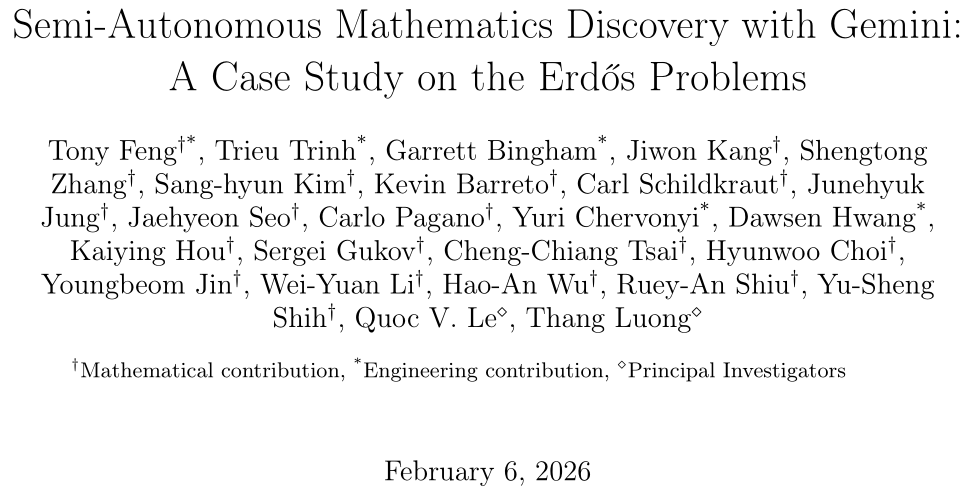 https://arxiv.org/pdf/2601.22401
Paul Erdős, among the most prolific mathematicians of the 20th century, left a vast legacy of papers and unsolved conjectures. In 2023, Thomas Bloom launched ErdosProblems.com, a centralized repository designed to catalog these conjectures and track progress on them. The database tracks 1,183 problems, with 491 (42%) classified as solved.
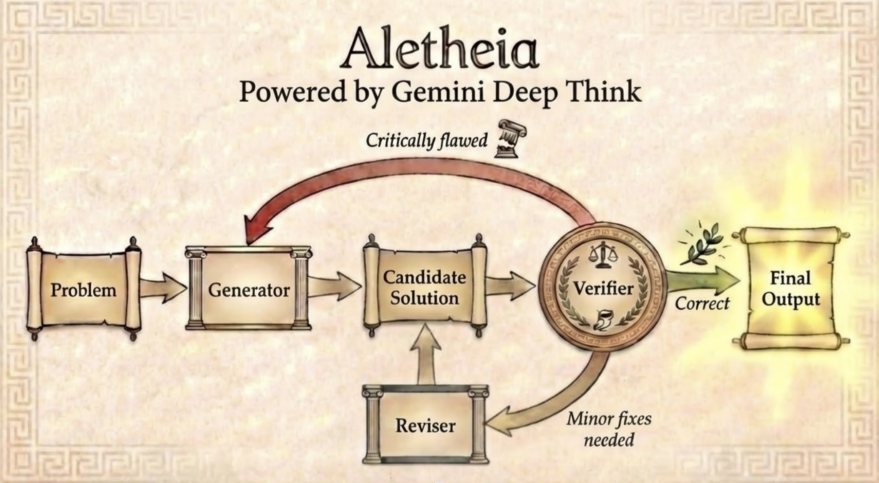
“Perhaps surprisingly, the lengthiest and most arduous step of our effort was the final one of investigating whether the solutions were already in the literature, and whether they really addressed the intended problem.”
“Some question formulations were eventually found to have very subtle issues, tracing back to mistranscriptions or omissions in either the website or in the original writings of Erdős, rendering the problems too easy. Most of the time, however, it was due to notational/definitional convention ambiguity, as Aletheia had not been informed of the definitional conventions laid out on Bloom’s site, and so would commonly confuse different (valid) interpretations of technical terms.”
“Indeed, the number ‘13’ of meaningfully correct solutions was substantially higher before we undertook this final investigation (and the number ‘4’ of novel autonomous solutions was once as high as ‘9’), and it fell further after we circulated our solutions privately among external experts; all decreases came from issues of disentangling literature rather than issues of mathematical correctness.”
| Problems Considered | 700 | |
| Candidate Solutions | 200 | |
| Correct Solutions | 63 | |
| Literature Identification | 5 | #333, #591, #705, #992, #1105 |
| Independent Rediscovery | 4 | #397, #659, #935, #1089 |
| Partial Solution | 2 | #654, #1040 |
| Autonomous Resolution | 2 | #652, #1051 |
Autonomous Resolution: #652, #1051

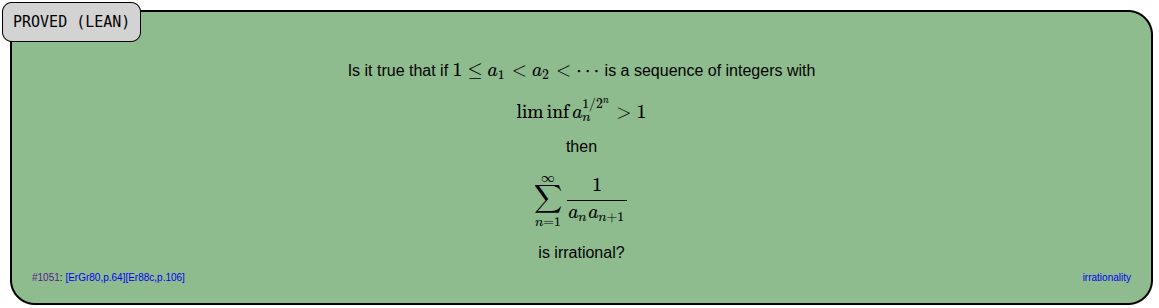
Partial solutions: #654, #1040,
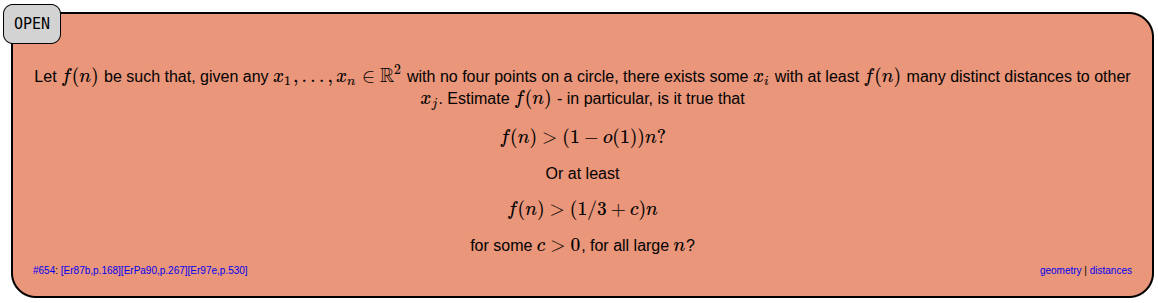
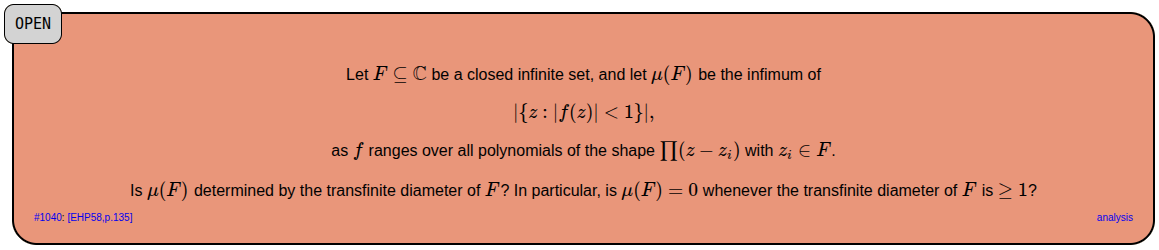
“previous AI-assisted work on Erdős problems 1026, 397, 333, and 281 was discovered, after initial announcements of novelty, be redundant with the literature. To the outside observer, this may present a misleading impression of mathematics research: in the authors’ experience, it is very unusual for human-generated results to be redundant in this manner (in the modern era of communication). One reason why it seems to be happening so frequently with AI-generated work on Erdős problems is that the solutions are so simple that they would not attract attention if they originated from humans. For instance, Erdős-1089 is answered by an offhand remark in a 1981 paper [BB81], where the authors seemed unaware that they had resolved an Erdős problem.”